
The latest Paradroid work has been about making the ship easier to read and the decisions inside it more interesting. Since the previous development log, versions 0.9.5 and 0.9.6 have brought changes to transfer difficulty, weapon behaviour, touch controls and the ship’s terminals.
A transfer opponent worth learning
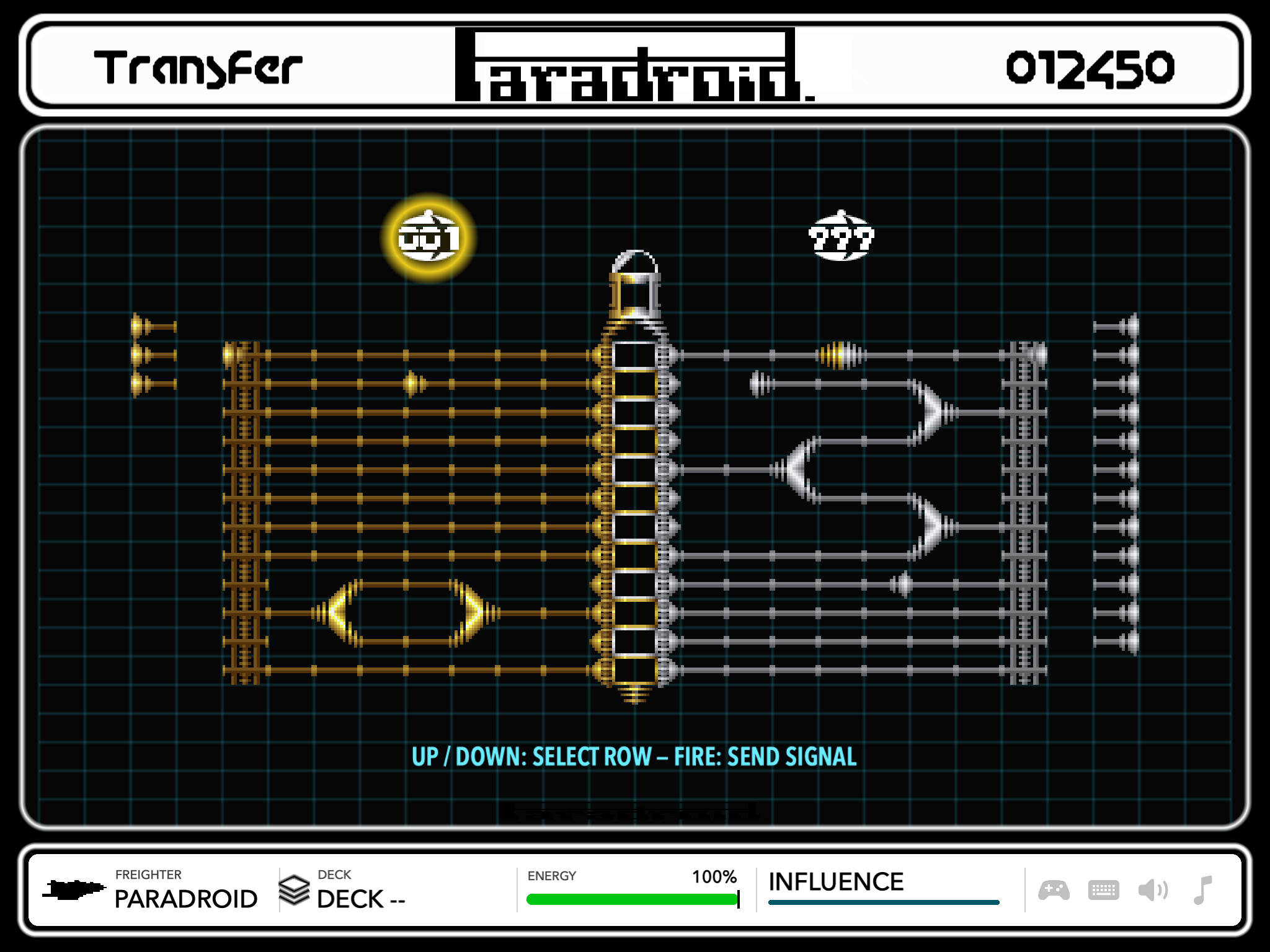
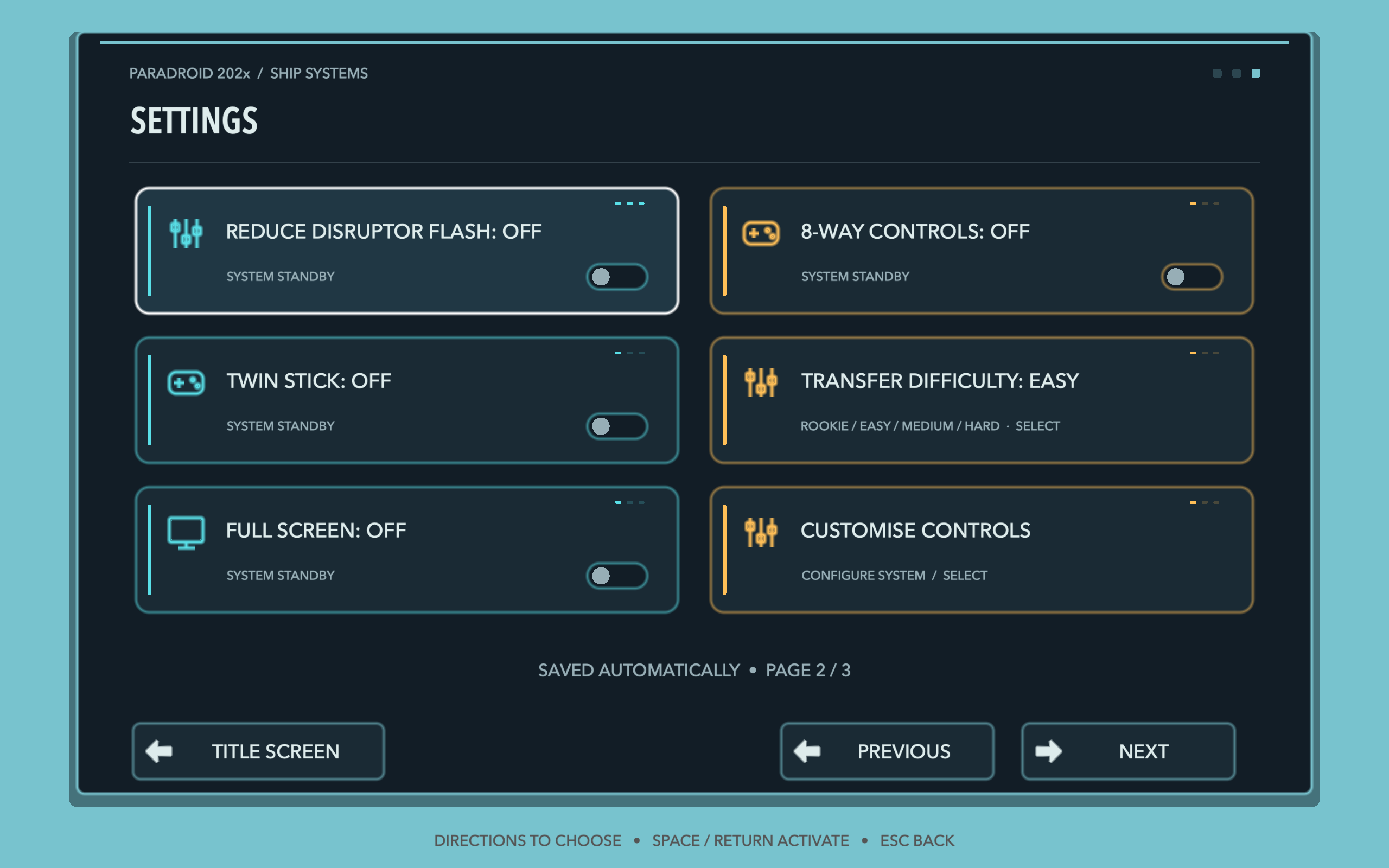
The transfer game now offers Rookie, Easy, Medium and Hard difficulty, with Easy as the starting point. The setting changes how quickly the opponent reacts and how often it chooses a weaker route. Even a powerful droid should leave room for a daring attempt; the aim is a tense contest rather than an opponent that always finds the best answer.
That balance still needs hands-on testing. The circuit layouts have also been adjusted to offer useful routes with fewer dead ends, and the opponent’s circuitry has gained more colour variants.
Two bullets, two outcomes
Weapons that appear to fire a pair of bullets now give those bullets independent collision behaviour. If one hits a wall, the other can keep travelling. That makes the visible shot a better guide to what can actually happen, particularly around doorways and corners.
The destruction sequence has had attention too. Game over now leaves time for the larger explosion to finish, while debris leaves in shorter bursts instead of a drawn-out stream. Clearing a deck fades its scenery into dark grey, and the final transmission keeps the current deck’s background colour. The score display now holds a stable baseline as its digits change.
A terminal that belongs on the ship
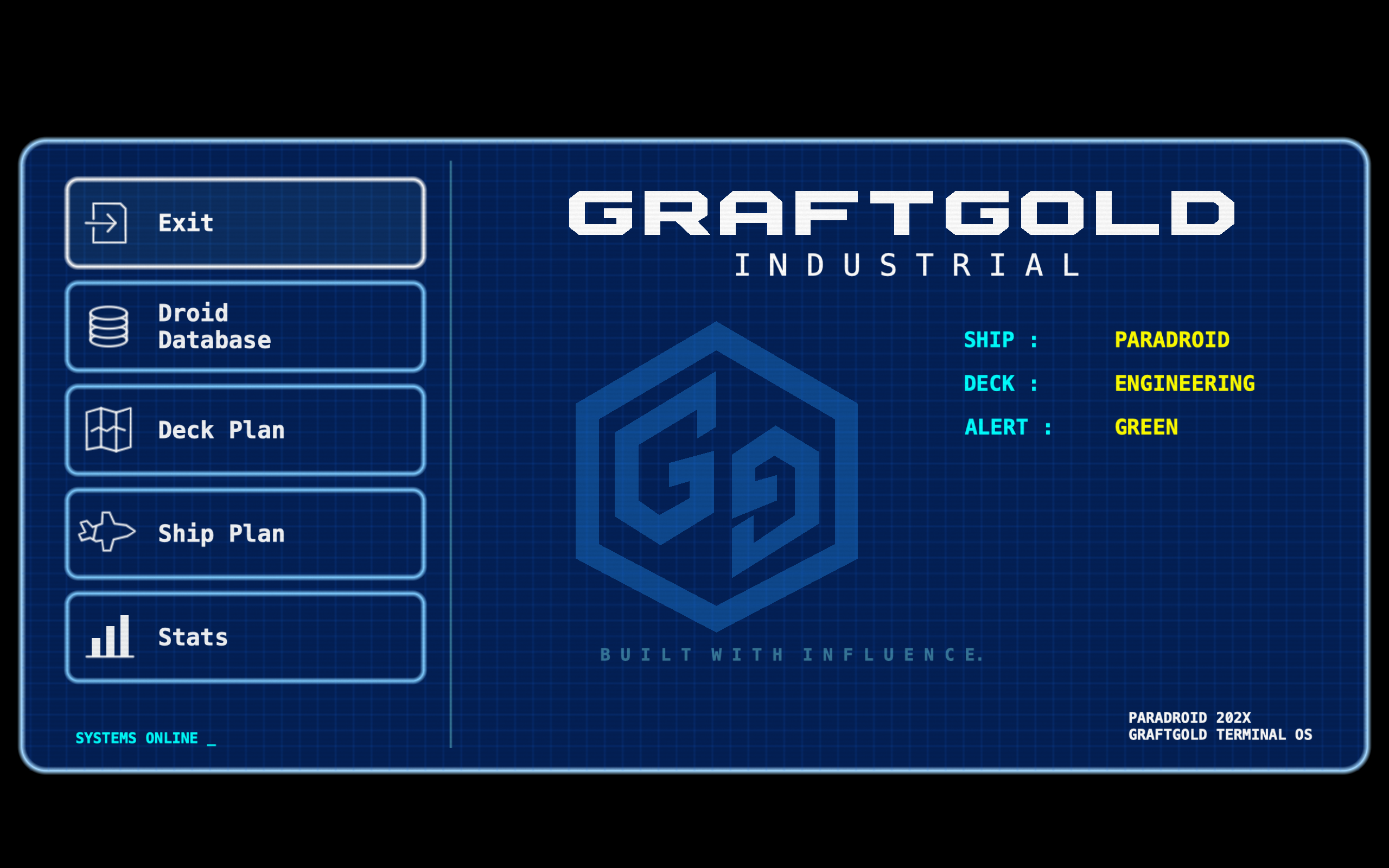
The terminal has a typed logon sequence, subtle CRT scanlines and grain, and revised menu presentation. The intention is to make consulting the ship’s systems feel like part of boarding a freighter, while keeping the information readable.
On iPhone, the transfer game now has dedicated onscreen controls. The HUD and transfer layout have also been refined so the controls and circuit can share a small display more effectively.
Challenges rather than automatic rewards
The achievement work is moving away from awards for routine actions and towards challenges that ask for a different approach to a mission. Existing lifetime statistics still retain those everyday actions; they do not all need an achievement banner.
The statistics screens also now show score and decks-cleared trends from the last twelve completed missions, alongside a combat-method breakdown. That should make it easier to see how a run compares with recent attempts without reducing everything to a single best score.
Still in development
These are changes to the development builds, not a public release announcement. Transfer balance, signed-device testing and the final Game Center configuration still need attention before release. The useful next step is to play through the changes together: readable controls, convincing feedback and a fair opponent have to work as one experience.